
Selecting the optimal pump control for data centers – what you must ask your supplier
With data center specifications getting increasingly precise, manufacturers have reduced choice over what components to use in coolant distribution units and other pumping applications. However, choice remains over which supplier to use, and the decision can be momentous; the wrong choice risks alienating valuable customers at best and crashing essential infrastructure at worst. Torben Poulsen, Business Development Manager – Pumps at ABB, outlines what manufacturers and operators should bear in mind when they evaluate potential suppliers.
Data center owners demand equipment that precisely fits their specifications. It must be sourced from reliable, reputable, global suppliers and supported with excellent service over a long lifetime.

These customers are very particular, and with good reason. But they usually stop short of specifying an exact model or brand. Imagine you’re an original equipment manufacturer (OEM) hoping to supply Google with coolant distribution units (CDUs): vital systems that stop their powerful servers from overheating.
Google specifies details like the voltage of the CDU’s pump, the temperature range the pump and variable speed drive (VSD) controlling the pump speed must operate at, and the sensor data the unit must be able to send to the programmable logic controller. They might mention the ACH580-31 ultra-low harmonic (ULH) drive from ABB as an illustrative example of a drive that meets the specification – this is exactly what was done in the first edition of the specification for CDUs in Google’s open compute project Dechutes – but they won’t dictate that you must use that specific drive in your CDUs.
So while data center specifications are strict, OEMs do have some freedom. If the specification names an illustrative pump or drive, but that particular model isn’t available, manufacturers can select one from a limited group of alternative approved suppliers, as long as it still meets the requirements.
This is where the reputation of the supplier becomes as important as the parts they provide.
Look for experience and expertise
The right supplier will have a long and proven track record of quality, reliability, and service – because in data centers, uninterrupted operation is everything.
Uptime is the product data center owners are selling. Any and all downtime in a data center is money down the drain, with an average downtime cost of 9 kUSD per minute. And for higher tier data centers, those servicing finance or healthcare applications, downtime interrupts systems that people depend on.
The degree to which data center owners prioritize uptime is evident in their design. Especially at higher tiers, data centers are designed with multiple redundancies. If the cooling system requires one pump to function, then in reality it requires two pumps: one duty pump to do the job and one standby pump in case the first pump fails. The two pumps might trade off every few hours so they both last longer. In that case, the second pump will fully power up before the first one powers down, so the coolant doesn’t stop circulating for even a second.
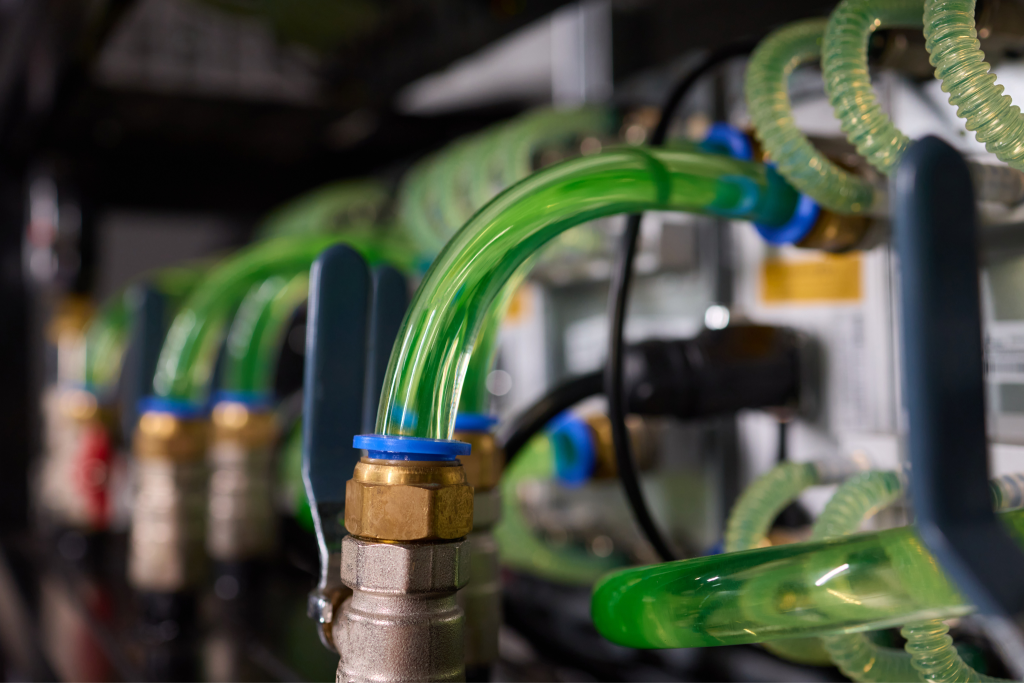
This calls for pumps that can withstand constant heavy use; that won’t fail unexpectedly; and that will be quickly and easily repaired or replaced, like for like or with a compatible equivalent, if something does go wrong.
These are all qualities that can only be proven over time. A new startup could always claim they have what it takes; but it’s less risky to go with an established supplier, backed up by a track record of actually delivering parts that perform to the right standard. And the stakes are too high for data centers to take risks.
Check for consistent products and services everywhere
The right supplier also needs global presence. Hyperscalers might use local contractors for the data center building and to connect it to the local electricity grid and water supply. But everything else, from the server racks to the office furniture, a hyperscaler will bring in themselves. Their aim is total consistency on a worldwide basis. For them it’s more efficient to work with global reliable suppliers wherever possible, so they can build and replicate all their data centers to a standard specification.
This is another reason data centers tend to be so high-spec. A standardized global approach means the selected parts need to perform equally well in Iceland as in a US desert.
These two parameters – longevity and global presence – narrow down OEMs’ options considerably. There are less than ten truly global drive suppliers in existence today that can supply standard parts worldwide, to data center specifications, and have crucially been around long enough to prove their staying power.
This is especially true of ABB. We have been in business for over 140 years, delivering drives for over 50 years, serving data centers for decades, and will still be here in 50 years’ time.
Trust the track record, but test the parts
Before staking their reputation and customer relationships on a supplier, OEMs should put the parts they provide through a rigorous and exacting test program to confirm they will perform in the demanding operating regime found in data centers.
If, after assessing compatibility with specifications, ability to deliver globally, and long-term reliability, there are still multiple suppliers to choose from, OEMs can start to consider other factors – like outperforming the specification in terms of enhanced energy efficiency or power quality characteristics.
The key priority in selecting a drive for a data center is always to minimize risk. That is why an OEM must ask their supplier, three key questions:
- What is your global presence?
- How do you confirm the quality of your drives?
- What is your track record in the data center industry?
As ever in the data center world, uptime is king. And OEMs who recognise that fact will be set for a royal welcome.
See here for more information on ABB’s expertise in pumps