
From simple measured values to smart safety systems: point level measurement with VEGA
In industrial process automation, point level detection sits at the heart of safe and efficient plant operation. Whether in chemical processing, power generation, food production or marine applications, level switches must perform one task without fail: detect when a defined limit has been reached, then act on it — trigger a pump shutdown, close a valve, or raise an alarm before a situation becomes a hazard.
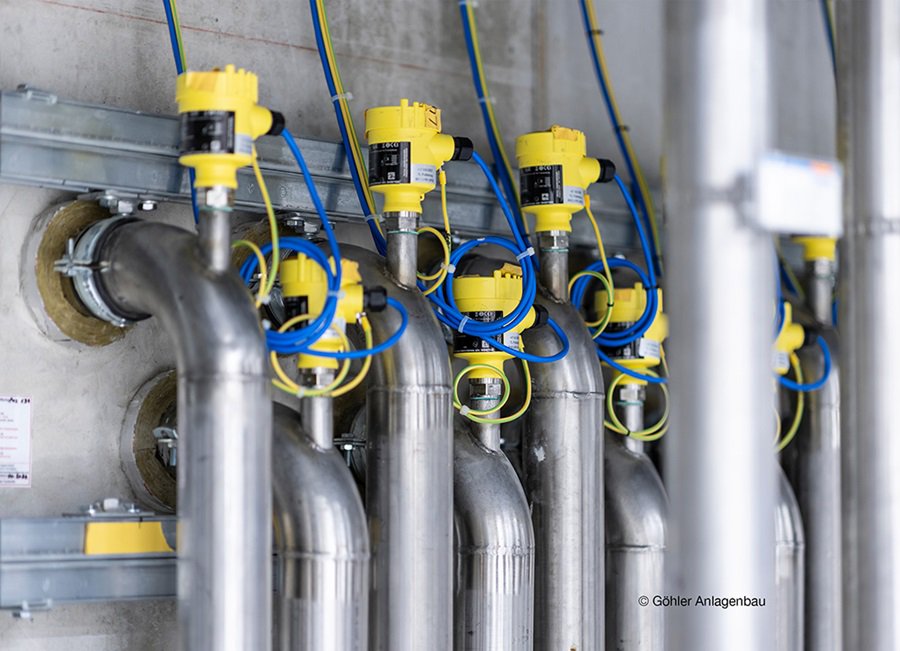
The role is deceptively simple, and the engineering behind it is anything but. Modern level switches do far more than deliver a binary switching signal. They gather process data, enable advanced diagnostic functions, and communicate across digital plant networks. In an era of increasing automation and tightening safety legislation, they have become indispensable, not just as instruments, but as active contributors to plant integrity and efficiency.
Choosing the right principle
A wide range of physical measurement principles underpin point level detection, each with its own strengths and limitations.
Capacitive sensors can handle non-conductive media but require parameterisation for each product and are susceptible to buildup and deposits, making them better suited to stable processes with consistent materials. Conductive devices are cost-effective but work only with conductive liquids and offer limited robustness. Mechanical float switches are straightforward in concept but demand regular maintenance and are prone to fouling and wear.
Microwave and radiometric technologies offer non-contact, media-independent operation but involve more complex installation and, in the case of radiometric systems, regulatory approval, which makes them better reserved for genuinely extreme process conditions.
Vibrating level switches, operating on the tuning fork principle, have emerged as the preferred solution across the widest range of applications, particularly for liquids. They are media-independent, require no calibration, and contain no moving parts. The result is a technology that is both inherently robust and essentially maintenance-free.
How vibrating level switches work
A piezoelectric vibrating fork oscillates freely in air. When it contacts liquid, the change in frequency and amplitude triggers a precise switching signal. Critically, this behaviour is consistent regardless of the medium’s density, viscosity, or tendency to foam — properties that usually affect capacitive or conductive measurement principles.
The practical advantages of vibrating level switches are significant. There is no need to recalibrate or re-parameterise when products change. The absence of moving parts eliminates wear. And the technology remains stable and reliable even under demanding conditions: tolerates temperatures up to 450 °C, pressures to 160 bar, high flow rates, pulsating media, and aggressive chemistries.
For hygienic applications in food, beverage or pharmaceutical production, polished surfaces, gap-free process connections, and full CIP/SIP resistance — alongside compliance with global standards such as EHEDG, FDA and 3-A — make vibrating switches a natural choice.

Where they work
The applications span the full breadth of process industry operation. As overfill protection, vibrating level switches prevent tanks, reactors and storage vessels from exceeding maximum permissible fill levels.
As dry-run protection devices, they guard pumps, transfer and dosing systems from cavitation and damage by detecting when liquid levels have fallen too low, preventing costly downtime and energy waste.
In pipelines and processing systems, they deliver reliable level detection through product changeovers and two-phase flows, untroubled by foaming or entrained gas.
Across all of these roles, the commercial case is consistent: reduced maintenance intervention, high plant availability, and straightforward verification of functional safety, including digital test reporting.
More than a switch
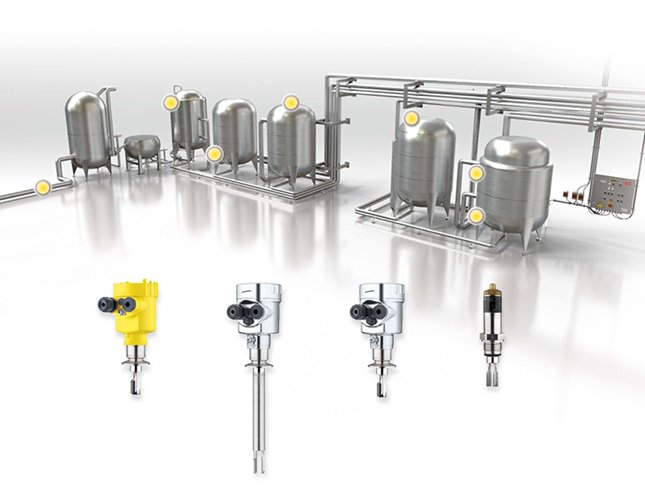
The evolution of the vibrating level switch from a simple point sensor to an intelligent, digitally networked safety instrument reflects a broader shift in process automation. Today’s devices from the VEGASWING series deliver SIL 2/3 certification and integrated Ex protection alongside their core switching function. They communicate via digital protocols, support Bluetooth connectivity for configuration and diagnostics, and generate automatic test reports — all of which simplify compliance and reduce the burden on maintenance teams.
Connected from the start
VEGA’s digital ecosystem extends well beyond the instrument itself. The free VEGA Tools App gives engineers on-site access to back-up and restore, and calibration functions directly from a mobile device, while the myVEGA online portal brings ordering, payment and instrument configuration together in one place. Integrated inventory management with VEGA Inventory System means asset data is always current and accessible which reduces administrative burden and supports faster, more informed maintenance decisions across plants.
Built for Efficiency, Designed for Compliance
The efficiency case extends beyond the process itself. Precise point level control reduces chemical consumption and minimises waste; optimised pump management cuts unnecessary energy use; and maintenance-free operation reduces the resource burden on engineering teams over the lifetime of the installation.
For forward-thinking plant operators, this combination of ecological responsibility and economic efficiency is increasingly a deciding factor in instrumentation specification. For large UK enterprises, the measurable energy reductions achieved through smarter level detection contribute to auditable efficiency evidence under the Energy Savings Opportunity Scheme (ESOS).
The bottom line
For process engineers specifying instrumentation in chemical plants, energy facilities, food production or oil and gas operations, the vibrating level switch has become the benchmark, not because it is the most complex technology available, but because it delivers the most consistent performance across the widest range of conditions, with the least ongoing demand on plant resources.
Those who rely on certified, digital level switches in planning and operation can benefit twice over: maximum process reliability and permanently low operating costs thanks to maintenance-free functionality.